A Comprehensive Guide to Common Misconceptions about using Ovens
Creating a cozy summer home that serves as a peaceful retreat requires carefully selected appliances that enhance comfort without sacrificing style or efficiency. At Appliances 4 Less Charleston, we offer residents near James Island, Charleston Heights, Ashley Shores, Fort Burr, Drum Island, a selection of open-box, scratched and dented appliances that are perfect for enhancing your summer living. Here is our guide to the must-have appliances for a cozy summer home.
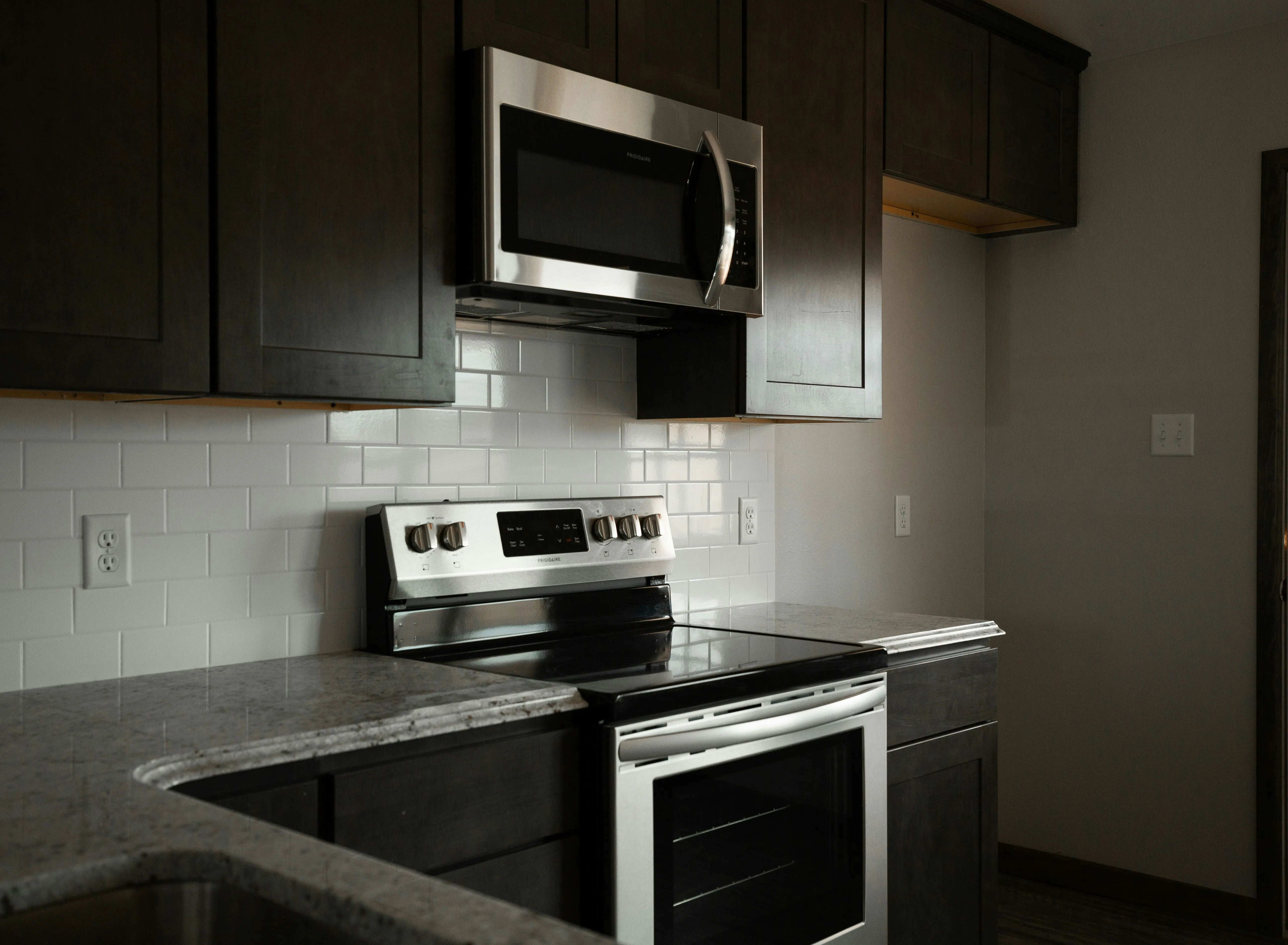
The oven has long been a powerful tool for baking and cooking in the kitchen. Whether it's toasting bread, roasting meat or cooking home-style dishes, it's indispensable. But many people operate the oven by intuition and unknowingly fall into various traps, which not only affect the taste of the food, but also shorten the lifespan of the oven and even pose safety risks. Today, we'll help you sort out the common misconceptions about using an oven, avoid these pitfalls, and use the oven correctly with ease!
.png)
1. The problem of temperature control deviation and its countermeasures
Misconception 1: Over-reliance on the built-in temperature measurement device of the oven
Household ovens typically use simple thermistors or bimetallic strip built-in sensors whose accuracy is limited by installation location, calibration deficiency and long-term thermal aging, with measured system errors often reaching ±15°C, which cannot support the precise execution of temperature-sensitive baking processes. It is recommended to use a metrology-traceable food-grade probe-type digital thermometer and perform reference verification under no-load conditions: set the target temperature at 200°C, preheat for 15 minutes, and then measure three times continuously at the geometric center point of the chamber, and take the average to calculate the deviation; Based on this, construct a segmented temperature compensation matrix and incorporate it into the daily operating procedures.
Misconception 2: Ignoring the impact of preheating on the uniformity and dynamic response characteristics of the thermal field
Preheating is not just about meeting the temperature values, but also about the heat mass distribution inside the oven and the activation state of the forced convection system. Insufficient preheating leads to inadequate heat retention in the oven walls, disrupted airflow disturbances, which in turn cause process defects such as uneven heating, delayed expansion, and abnormal color gradients. It takes an average of 12 to 15 minutes for a typical countertop electric oven to reach 200°C and achieve a steady-state thermal environment with a space temperature fluctuation of ≤±3°C and a horizontal temperature difference of ≤5°C. This state provides repeatable initial boundary conditions for subsequent thermal processes and should be used as a prerequisite criterion for formal feeding.
Misconception 3: Frequent opening of the furnace door during operation disrupts the continuity of the thermal process
The opening action causes forced thermal convection interruption and sudden changes in chamber pressure. Measurements show that a single opening (lasting ≥2 seconds) can cause a sudden drop of 20-30°C in the center temperature, and due to the thermal inertia effect, it takes an additional 5-10 minutes on average to restore the temperature to the original set value, significantly extending the effective heating time and increasing energy consumption. It is recommended to use a high light transmittance observation window for non-intrusive monitoring throughout the process; When intervention is necessary, strictly limit the door opening time to no more than 2 seconds and avoid critical phase change Windows (such as the peak period of cake batter volume expansion and the critical period of flaky crust moisture migration).
.png)
2. Surface excessive Browning/carbonization: Synergistic regulation based on thermodynamic and mass transfer principles
Misconception 1: Blindly raising the set temperature without considering the thermophysical parameters of the food
Although the high-temperature short-time mode can enhance the Maillard reaction and caramelization rate, it is prone to break the dynamic equilibrium threshold of surface water evaporation and internal heat conduction, resulting in a mismatch of interfacial heat flux, typically manifested as premature hardening of the shell and insufficient heat penetration in the center. It is recommended to roast the whole chicken at a constant temperature of 180°C for 60 minutes. Compared with the 220°C ×40 minutes scheme, the water retention rate of myofibrils is increased by 22.7%±1.3% (p<0.01) while ensuring that the core temperature of the poultry meat is ≥75°C, which can effectively lock the juices of the chicken meat.
Misconception 2: Not implementing thickness adaptive time control based on the difference in Fourier number
The thickness of the food directly affects the dimensionless Fourier number (Fo = αt/L²), which determines the characteristic time required for heat penetration. Under the same boundary conditions, the ratio of time required for a 1 cm thick steak to a 3 cm thick pork tenderloin to reach a center temperature of 70°C is approximately 1:9. Therefore, it is necessary to abandon empirical timing and instead adopt real-time feedback control of core temperature - 75°C /15 seconds for poultry products and 63°C /15 seconds for red meat - to ensure the synergistic optimization of pathogenic microbial inactivation and sensory quality.
Misconception 3: Lack of engineering application of the local inhibition mechanism of radiant heat flux
Products with more than 25% (w/w) sugar content and more than 3mm surface fat layer, such as cheesecakes and apple pies, are prone to irreversible carbonization reactions in the middle and later stages of baking due to increased infrared radiation absorption rate and accelerated surface dehydration. It is recommended to cover with uncoated food-grade aluminum foil (reflectance ≥85%) when the total baking time reaches 50% - 60% to build a physical barrier with thermal reflectance - low thermal conductivity composite properties, reducing the top net radiant heat flux by approximately 40%, simultaneously inhibiting the rate of moisture migration, and ultimately achieving a dual improvement in color uniformity and texture wettability.
.png)
3. Uneven heating: A scientific rule of spatial layout
Misconception 1: Stacking baking trays too closely
Hot air needs to form circulation paths within the oven. The baking trays should be spaced at least 3cm apart to avoid blocking the upper and lower heating tubes. Measurements show that proper spacing can increase temperature uniformity by 40 percent.
Misconception 2: Ignoring the "hot zone" feature of the oven
All ovens have a "hot zone" (usually the upper layer) and a "cold zone" (the lower layer). It is recommended to conduct a "slice test" for the first use: Spread the slices of bread all over the baking tray, observe which slice of bread is colored first, mark the hot zone position, and then place the ingredients that need to be baked at high temperature in the hot zone.
Misconception 3: Not using a rotating grill or baking tray
For whole chickens and large chunks of meat, use a rotating grill to ensure even heating at 360°. If using a baking tray, it is recommended to rotate 180° every 15 minutes to avoid overexposure on one side.
.png)
4. Advanced Tips: Material selection and Maintenance
Baking tray material selection:
Glass/ceramic baking tray: Good heat retention, suitable for slow-roasted foods, but requires preheating to prevent cracking;
Metal baking tray: Fast heat conduction, suitable for thin slices, but beware of the risk of the anti-sticking coating peeling off;
Silicone molds: Heat-resistant and easy to demold, but avoid scratching with sharp tools.
Key points for cleaning and maintenance:
Clean up oil stains promptly after each use to avoid the formation of stubborn stains due to high-temperature carbonization;
Perform "empty burn cleaning" monthly: Bake at 200°C for 30 minutes to soften the oil stain and then wipe with a damp cloth;
Regularly check the heating tubes for dust accumulation that affects thermal efficiency.
Conclusion
An oven is not a foolproof appliance, but a precise tool that requires scientific operation. Remember: Good baking results =50% oven performance +30% scientific operation +20% ingredient handling.