Why shouldn't a refrigerator be overloaded?
- Wilson Tom
- 3 days ago
- 4 min read

Creating a cozy summer home that serves as a peaceful retreat requires carefully selected appliances that enhance comfort without sacrificing style or efficiency. At Appliances 4 Less Charleston, we offer residents near James Island, Charleston Heights, Ashley Shores, Fort Burr, Drum Island, a selection of open-box, scratched and dented appliances that are perfect for enhancing your summer living. Here is our guide to the must-have appliances for a cozy summer home.
The refrigerator is an indispensable fresh-keeping assistant for modern families, but many people are used to stuffing it full, thinking that this is the best use. In fact, overloading is not only unable to improve the cooling efficiency, but will make the refrigerator overwhelmed. This article starts from the principle of refrigeration, analyzes how overload affects the refrigeration performance of refrigerators, and provides scientific storage suggestions to help you make refrigerators both sufficient and easy to use.
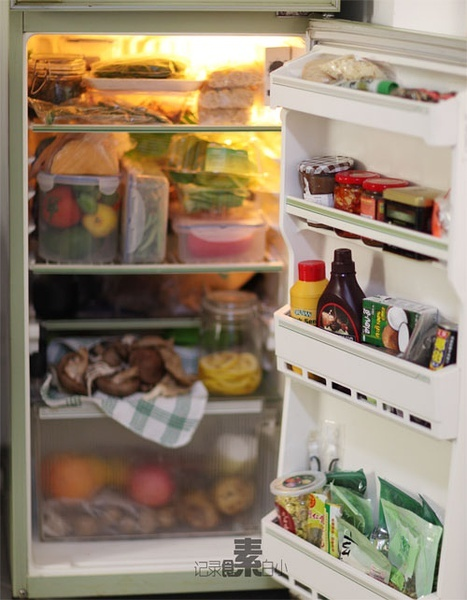
(1)、Basic working conditions of refrigerator refrigeration
To figure out why the refrigerator can't be overloaded, we first need to understand how it cools. Household refrigerators generally use vapor compression refrigeration, and their maintenance of low temperature mainly depends on two physical processes:
1. forced convection heat transfer
The cold air is sent out from the air outlet near the evaporator, flows through the surface of the food to absorb heat, and returns to the evaporator to cool again after warming up. This 1 whether the cycle is smooth and directly determines whether the temperature in the box is uniform.
2. intermittent operation mechanism
The refrigerator monitors the temperature in the box through the thermostat. When the set value is reached, the compressor stops and starts again after the temperature rises. This 1 working mechanism requires the heat load in the box to be within a reasonable range.
When the internal load of the refrigerator exceeds the design tolerance range, the above two conditions will be destroyed.
(2)、How overload affects refrigerator refrigeration
When there is too much food in the refrigerator, placed too dense, will interfere with the normal cooling from the following aspects:

1. hindering air circulation
①. air-cooled refrigerator
The air-cooled refrigerator relies on the fan to blow out the cold air and send it to each layer through the air duct. When the food is placed too densely, especially when the air outlet or return air outlet is blocked, the air-conditioning cannot flow effectively, resulting in high local temperature. Even if the compressor continues to work, there may still be uneven cooling and heating in the box or even no cooling at all.
②. Direct cold refrigerator
Although the direct cooling refrigerator has no fan, the amount of cold is transferred by natural air convection. Too much food will hinder the natural circulation of cold air sinking and hot air rising, which also makes it difficult to cool down.
2. the heat capacity is too large to increase the load
Food itself has a heat capacity. The food in the refrigerator needs to be cooled to a set temperature. For every additional batch of food in the refrigerator, an additional batch of heat needs to be removed. When the refrigerator is overstuffed, especially when a large amount of food at room temperature or not precooled is placed at the same time, the heat load increases sharply, the compressor runs at high load for a long time, and the cooling speed slows down.
3. affect the judgment of temperature sensor
At present, most modern refrigerators are equipped with temperature sensors, and their common installation positions are around the evaporator or at the return air. However, once these areas are covered by food, the temperature measured by the sensor will be lower than the actual storage area temperature, which will cause the compressor to stop in advance, and finally cause the problem of poor overall refrigeration effect of the refrigerator.
4. reduce the heat exchange efficiency of the evaporator.
When the food is close to the inner container or back of the refrigerator, it will directly block the heat exchange between the evaporator and the air in the box. In order to save space, some users use plastic bags and fresh-keeping boxes to place them close to the back wall, making it difficult to distribute cold energy into the box, but speeding up the frosting of the evaporator and further weakening the cooling capacity.
(3)、Suggestions for scientific use
Based on the above principles, reasonable refrigerator storage should follow the following principles:

1. control loading
It is recommended that the total volume of food inside the refrigerator does not exceed 70% to 75% of the effective volume. Leave about 1/4 of free space for air circulation and cooling buffer.
2. put hot food in after cooling down
Hot soup and leftovers should be naturally cooled to room temperature before putting them in the refrigerator. Putting high-temperature food directly will not only greatly increase power consumption, but also increase the temperature of the surrounding cold storage and bury food safety hazards.
3. partition storage
①. The upper temperature of the refrigerator compartment is relatively stable, suitable for placing cooked food and dairy products.
②. The middle view is the best, suitable for the leftovers to be eaten on the same day or the next day.
③. Lower lowest temperature, suitable for placing raw meat, seafood.
④. Drawer moisture is good, store fruits and vegetables.
⑤. The door frame has the largest temperature fluctuation and is only suitable for storing non-perishable foods such as beverages and condiments.
4. clean up regularly to avoid hoarding
The refrigerator is not a storage room, but a preservation tool. Long-term storage not only takes up space and affects refrigeration, but also breeds bacteria and produces peculiar smell. It is recommended to check once a week and deal with expired or no longer consumed food in time.

Conclusion
The core value of the refrigerator is how long it can keep fresh. Appropriate white space and reasonable partition are not only respect for electrical appliances, but also good treatment for food. A refrigerator with a capacity of 70% is often more uniform, fresh-keeping and energy-saving than a refrigerator with a capacity of 90% full. Mastering scientific methods of use can not only keep the ingredients in better condition, but also
extend the service life of the refrigerator.


Comments